Rust solo survival works when one player turns a monument into a fortress and defends it against the whole server
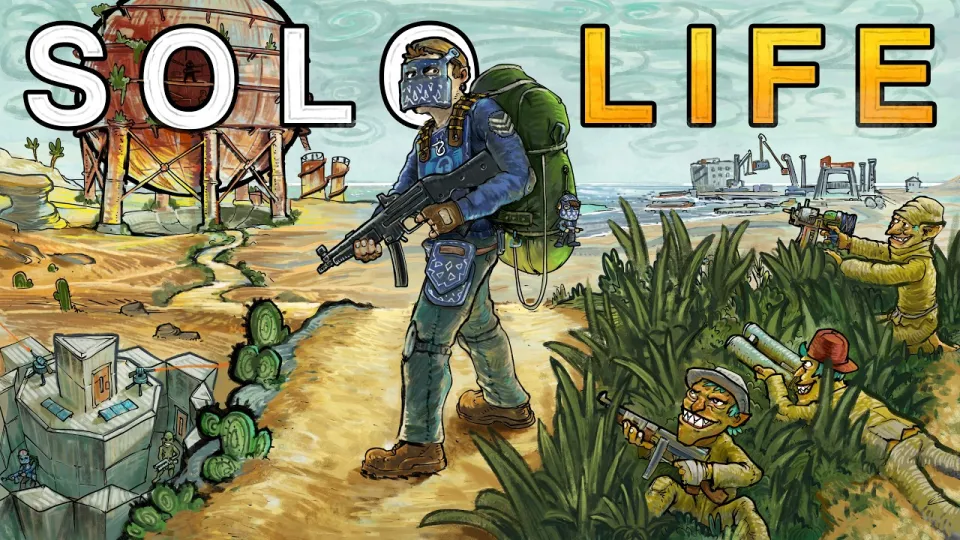
Video: Rust - THE SOLO LIFE V16
Want articles like this for your own video to promote it on YouTube and Google? Order them through the Telegram bot @sat_sit_bot. It writes articles around your video, embeds the video and publishes them on popular niche websites (no ads). Try it free: 50 articles on us.
· based on the channel Blooprint
Key takeaways
- Solo Rust runs on monument control: one player holds a high-value location and farms it between fights.
- Blooprint's THE SOLO LIFE V16 is a solo run built around holding an OP monument while multiple neighbors try to push him out.
- Online raid defense is the core test: a solo base survives only if the owner is awake, loaded and has a safe respawn nearby.
- Cargo ships, parachute drops and the Dome give a solo player high-tier loot without needing a group.
- Friendly neighbors and informal truces matter as much as aim when you are outnumbered on a populated server.
Rust solo survival means one player takes a high-value monument, farms it alone and defends the base against every neighbor who wants it. It works when the solo player controls the timing of fights, keeps a respawn close and turns the monument's loot into a defense budget instead of a one-time score. Blooprint's solo series returns to exactly this formula in THE SOLO LIFE V16, and anyone who wants to run solo on a populated server can treat the run as a working template — the same approach applies whether you are grinding scrap or picking up a free War Thunder bonus through the sponsor link between wipes.
What holding a monument solo actually means in Rust
Holding a monument means a solo player claims a profitable location, builds within reach of it and treats every contest as a scheduled fight rather than a surprise. Monuments such as the Dome, Launch Site or Military Tunnel pay out components, scrap and military crates, but they also attract groups who expect an easy kill. A solo player's advantage is not firepower — it is information: knowing who is farming, when a group rotates and which approach is unguarded.
In practice a monument hold looks like this:
- Build a small, cheap base within a short run of the monument, ideally with a second sleeping bag on the opposite side.
- Farm the monument in short cycles instead of long sessions, so a counter-push never catches you deep inside.
- Keep one box of throwaway gear for defense and one for the loot you actually want to keep.
- Learn the exits — ladders, cliffs, water — so a retreat is a route, not a panic.
The cost of a monument hold is attention. Every neighbor on the map learns your name, your base and your schedule, and that is exactly the pressure the solo format is built to show.
Reading the neighbors before they become raiders
Neighbors decide the outcome of a solo wipe long before the first rocket flies, because the people farming next to you are the people who will eventually test your doors. A solo player should treat every nearby base as a relationship with two possible endings: a truce that buys farming time, or a raid that has to be survived.
Useful habits from solo runs:
- Talk first. A short voice exchange with a neighbor often buys hours of uninterrupted farming.
- Trade small. Giving away a stack of components or a spare gun lowers the chance of a group deciding you are worth the sulfur.
- Watch door traffic. Counting comings and goings tells you how many players share a base and when it is empty.
- Never let a neighbor see your full loot room. Curiosity is how raids start.
Blooprint's run leans on this constantly: some neighbors turn into allies who help during a defense, others spend ten or twenty minutes chasing a single solo kill and lose their own farming time doing it. That trade is the quiet win of solo play — a group wasting a quarter of an hour on one player is a group not progressing.
Online raid defense as a solo player
An online raid is the only real exam for a solo base, because it removes the two things solo players rely on: surprise and preparation time. The attacker chooses the hour, the angle and the boom, and the defender has to answer with whatever is already inside the walls.
A defense plan that works without teammates:
- Build a shooting floor with multiple peek angles so one defender can cover several sides.
- Keep a locker with a ready kit near the defense point, plus a second kit in a backup base.
- Store boom separately from loot, so a breached wall does not hand over both.
- Use turrets as alarm systems and time-wasters, not as the main defense.
- Expect the second wave. Most online raids fail on the counter-push, not the first breach.
Small bases with honeycomb and a compact core survive longer than large ones, simply because every extra wall an attacker must break costs more sulfur than a solo player can farm back quickly. The classic starter layout — a compact core, a few layers and a shooting position above the door — remains the most efficient solo shell, and it is the pattern most solo creators return to wipe after wipe.
Cargo, parachutes and the Dome as a solo loot engine
High-tier loot for a solo player usually comes from the map, not from fights, because a lone player cannot win a straight trade against three opponents and still keep the loot. Cargo ships, airdrops and the Dome give a solo player access to military crates, weapons and components without a group backing them up.
- Cargo ship: board early, clear the deck from the stairs, and leave before the crates respawn and attract a counter-crew.
- Parachute drops: watch the flight path, land close, and treat the drop as a race you can lose gracefully.
- Dome: the parkour route to the top pays out military loot but leaves you exposed, so go when the server is quiet.
- Oil rig and large monuments: best attempted with a boat or car parked for a fast exit, not on foot.
Every one of these routes has the same rule: the loot is only yours if you get it home. A solo player who dies at the monument with a full inventory has paid for someone else's wipe.
Typical solo questions that decide a wipe
Most solo failures come from a handful of recurring questions rather than from bad aim, and answering them in advance saves entire runs. The most common ones are about base size, when to fight, and how to deal with groups that outnumber you three to one.
- How big should a solo base be? Small enough to rebuild in a day, layered enough that a raid costs more than your loot is worth.
- Should a solo player take every fight? No. Fights are worth taking when the loot on the line is better than the kit you risk.
- What beats a group? Time, terrain and patience — a group that chases you through a monument loses more than it gains.
- When is a base safe? Only while you are online and awake; offline protection in Rust is a schedule, not a wall.
The viewer discussion around the series keeps circling the same point: the appeal of solo content is not the kill count but the atmosphere of a chaotic server played calmly. That calm is a skill, and it is built from the routines above.
Useful links
- War Thunder bonus and free registration (PC and consoles)
- War Thunder mobile link
- Blooprint on Twitch
- Blooprint on Kick
- Blooprint on TikTok
Final takeaway
Solo Rust is a discipline of small decisions: claim one profitable monument, build a shell you can rebuild, keep a second kit ready and treat neighbors as either farming partners or future raiders. THE SOLO LIFE V16 shows the whole loop in one run — a monument hold, a crowd of irritated neighbors and an online defense that comes down to preparation rather than numbers. The channel Blooprint is the author of this run and the best place to see how the solo format holds up wipe after wipe. If you want to support the series and pick up a free bonus at the same time, use the War Thunder registration link before your next wipe starts.
Questions & answers
Can you really hold a monument in Rust as a solo player?
Yes, but only with short farming cycles and a base close enough to respawn and re-enter quickly. The solo advantage is information and timing, not firepower, so the hold depends on knowing when a group rotates and leaving before a counter-push arrives.
How do you defend a solo base during an online raid?
Build a compact core with honeycomb, add a shooting floor with several peek angles and keep a ready kit in a locker near the defense point. Store boom away from loot and expect a second wave, since most raids are decided by the counter-push rather than the first breach.
What is the fastest way for a solo player to get high-tier loot?
Cargo ships, airdrop parachutes and the Dome give military crates without needing a group. The rule is to board or land early, loot fast and get home, because loot lost at a monument is worse than loot never found.
Should a solo player fight groups or avoid them?
Avoid most fights and take only those where the loot on the line beats the kit you risk. Groups that chase a solo player through a monument burn time and resources, so patience and terrain are usually stronger than aim.
Source: Rust - THE SOLO LIFE V16 · Markdown version